
Chicken Game Gambling: An Uncrossable Online Casino Mission for Players from the United Kingdom
Per ciascuna tranche sinon devono acquistare requisiti uguale per 40x/45x ovvero 50x
02/07/2026Molte slot online ruotano da ogni parte per indivisible questione ben stabilito, ad esempio ne ascendente grafica addirittura premio
02/07/2026
The «chicken game» in online casino contexts—whether a slot titled Chicken Game or a risk-style table game mechanic—creates a specific tension for players in the United Kingdom. This article explores Chicken Game real payout segmentation in a UK context, examining player access barriers, regulatory considerations, payout behavior, and how the mission to play (and win) can feel uncrossable for many. The format is a Review.
Overview of Chicken Game Gambling
Chicken Game gambling often refers to high-variance game rounds where risk escalation and a single decision determine large swings in outcome. In online casinos, this mechanic appears as a bonus feature in slots, a separate mini-game, or a live-game variant. For UK players, gameplay and payout segmentation are shaped by licensing rules, game fairness standards (RNG and RTP disclosures), and platform-level limits such as stake caps and verification procedures.
Core Mechanics
- Escalation rounds where players choose to continue or cash out.
- Multiplier ladders that grow with each successful step but reset on a failure.
- Real-money segmentation affecting who sees which odds or bet limits based on UX, VIP tiers, or jurisdiction-specific rules.
Payout Segmentation in a UK Context
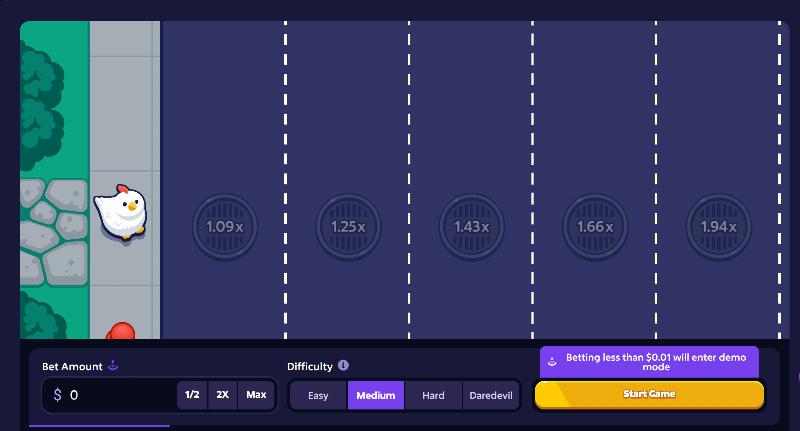
Real payout segmentation refers to how actual payouts are distributed across different player cohorts and how features like bet limits, RTP, and volatility influence those distributions. In the United Kingdom, the segmentation can be influenced by:
- UK Gambling Commission oversight mandating transparent RTP display and consumer protections.
- Operator policies—such as identity verification, deposit limits, and anti-money laundering (AML) monitoring—that gate access to higher-stakes rounds.
- Player demographics and behavior—newcomers vs. seasoned players typically occupy different payout bands.
Why It Feels Uncrossable
For many UK players, crossing the “mission” of mastering Chicken Game feels nearly impossible due to a combination of factors:
- High variance means long losing streaks before rare hits, causing early bankroll depletion.
- Regulatory safeguards (timeouts, self-exclusion, deposit caps) that can interrupt attempts to pursue streaks.
- Segmentation where certain favorable odds or higher tables might be reserved for verified high-rollers or specific account tiers.
How the Game Plays Out: A Typical Session
A typical Chicken Game session begins with controlled bets, assessing volatility. As the multiplier ladder climbs, the player must decide: press on for higher multipliers or cash out. The psychology of «chicken»—fear of loss vs. greed for more—compounds the difficulty of consistent success.
Example Round Flow
- Initial bet placed at a modest stake (e.g., £0.50–£2).
- Multiplier begins; player cashes out early for small wins or presses forward.
- After several successes, platform verification or stake limits may prevent escalating bets.
- Failure resets multipliers, and the player must either rebuild or stop.
Regulatory and Platform Barriers
The UK market is highly regulated, and while that increases player protection, it creates additional chokepoints:
- Mandatory identity checks can pause high-stakes play, causing timing issues in volatile rounds.
- Deposit limits and affordability checks can prevent players from recovering losses quickly.
- Bonus T&Cs often exclude or limit bonus use on high-variance features like Chicken Game-style rounds.
Impact on Real Payouts
These constraints shape payout distribution: smaller, more frequent payouts for the bulk of players; rare, large payouts concentrated among verified high-stakes participants; and a long tail of losses for casual players. The segmentation effect is visible in reported win distributions and in operator-led analytics.
Player Experience — The Emotional Arc
Emotionally, Chicken Game is a roller-coaster. UK players report:
- Adrenaline spikes with each decision to continue.
- Regret and frustration after resets, intensified by platform friction.
- Occasional euphoric wins that reinforce risk-taking despite regulatory brakes.
Behavioral Patterns
Typical behavioral patterns include cautious early play, bursts of aggression after small wins, and a tendency to chase losses—risk behaviors that UK operator tools specifically aim to moderate.
Review Summary: Strengths and Weaknesses
As a chicken game experience for UK players, the title or mechanic often offers high thrill and the potential for outsized payouts, but it is also constrained by realistic barriers.
Strengths
- High entertainment value and clear risk-reward dynamics;
- Potential for large, memorable wins.
- Transparent RTP information in licensed UK environments.
Weaknesses
- Payout segmentation often favors higher-tier accounts.
- Regulatory and KYC friction can interrupt critical moments.
- Long-term expected value remains negative for casual players due to volatility.
Comments on the Topic of Games
How to choose an online casino
Choose UK-licensed platforms with clear RTP disclosure, robust player protection tools, and transparent terms for bonus play. Verify deposit/withdrawal speed and look for independent audit reports. Avoid platforms that hide stake or win caps.
Questions and Answers
Frequently asked questions
- Q: Are Chicken Game-style mechanics fair? A: On UK-licensed sites, mechanics must adhere to RNG testing and RTP disclosure; fairness is audited by independent bodies.
- Q: Can a casual player realistically win big? A: Yes, but probabilities favor losses over time due to high variance; big wins are rare and typically concentrated among persistent or high-stake players.
Expert Feedback
Experienced Player
«I’ve seen huge multipliers land a few times, but most sessions bleed small amounts until you hit a lucky streak. In the UK, the verification steps are sensible but can be annoying when you’re mid-run.»
Table with the main parameters of the game
| Parameter | Typical Range / Value |
|---|---|
| RTP | 92%–97% (varies by implementation) |
| Volatility | High |
| Typical stake range (UK) | £0.10–£100 (depends on tier) |
| Max multiplier | Up to 10,000x in some implementations |
| Verification impact | May delay or cap stakes |
Practical Strategies and Tips
While there is no guaranteed strategy to «beat» Chicken Game mechanics, prudent approaches can reduce harm and improve session management.
Strategies and Tips
- Set strict loss and win limits before play—treat each session as entertainment budget, not income.
- Start with low stakes to learn the escalation curve and platform behavior under KYC or limits.
- Avoid chasing losses; use cooling-off periods to prevent impulsive repeat bet escalation.
- Use licensed UK casinos with clear terms so you know when segmentation or caps apply.
Analysis: Popularity and Market Dynamics
Chicken Game mechanics remain popular due to the intense decision moments they create. Market demand in the UK is buoyed by social streaming, highlightable wins, and integration into mobile-first experiences. However, popularity must be viewed against the backdrop of stricter UK regulations that intend to protect consumers from harmful risk patterns.
Distribution of Wins
Operator data typically shows a small percentage of sessions yielding outsized returns, while the majority result in modest losses. This long-tail distribution is typical for high-variance features and reinforces the perception that crossing the mission is difficult.
Chicken Game gambling delivers an adrenaline-charged experience with the potential for significant payouts, but within the UK it is bounded by regulatory safeguards, account-level segmentation, and operator policies that can make the mission to master or consistently profit feel uncrossable. Responsible play, choosing licensed operators, and realistic expectations are essential for any UK player who approaches this style of game.

